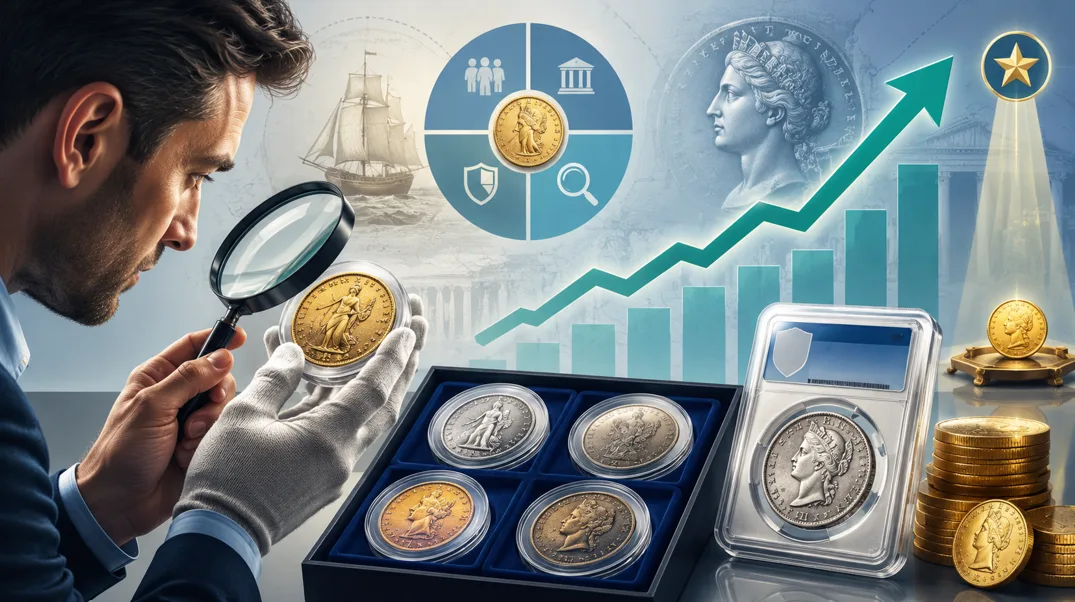
Quick answer: Why do coin collectors value rare coins so highly? Collectors pay massive premiums for coins with low original mintages, high survival scarcity, exceptional condition grades, and documented historical provenance. Specific mint marks and pristine uncirculated grades can turn a face-value coin into a multi-thousand-dollar investment asset.
Most residents inheriting estates in Central Florida find themselves staring at old coin collections, wondering what they actually hold. You might spot a few silver dollars or odd-looking pennies hiding in a dusty box. Before you take them to the bank, you need to understand exactly what creates value in the numismatic market. Need expert help right now? Contact HJ Coins & Jewelry at (863) 446-0713 for an honest, highly accurate appraisal.
What makes numismatic coins so valuable?
Numismatic investing involves buying coins for their collector value rather than just their base metal content. While bullion rises and falls with daily spot prices, numismatic pieces carry a premium based on rarity and demand. Our team at HJ Coins & Jewelry regularly evaluates collections across Highlands County that contain hidden gems.
Many families bring us jars of old coins hoping for a quick payout. They often walk away shocked by the actual value. A standard silver quarter might contain four dollars of silver. However, a rare date silver quarter can sell for thousands. This incredible gap between metal value and collector value defines the numismatic market. Collectors willingly pay these premiums to complete sets and own a tangible piece of history.
Why do coin collectors value rare coins so highly?
Coin collectors value rare coins highly because scarcity directly drives market prices. A coin's survival rate matters much more than its original mintage number. For example, the US Mint produced millions of 1916 Standing Liberty quarters. Only a tiny fraction survived in good condition.
We frequently explain to local sellers that a 5% drop in known surviving examples can push a coin's premium up by 40% or more. This supply and demand tension is exactly why do coin collectors value rare coins so highly. Serious buyers compete fiercely for the few remaining pristine pieces. When demand outpaces supply by that much, prices naturally skyrocket over time.
How do historical provenance and mint marks affect price?
Historical provenance and specific mint marks dictate massive price variations in the collector market. A single letter stamped on a coin tells you exactly where the government minted it. In my years serving Central Florida estates, I've seen how an “S” for San Francisco or “CC” for Carson City changes everything.
A common 1889 Morgan Silver Dollar minted in Philadelphia might sell for $40. The same coin minted in Carson City with a “CC” mark routinely commands $1,500 to $3,000. That massive jump is a perfect example of why do coin collectors value rare coins so highly. Provenance adds another layer of value. Coins previously owned by famous collectors often sell for a 20% premium at auction. Buyers love knowing their coin sat in a legendary collection.
How does a coin's condition impact its final appraisal?
Condition dictates the final appraisal price through a strict 70-point grading scale. A coin graded MS-60 (Mint State) will sell for exponentially more than the same coin graded AU-50 (About Uncirculated). Even a tiny scratch visible only under a jeweler's loupe can reduce a coin's value by 30% to 50%.
When our technicians inspect collections near Highlands Hammock State Park, we use proper magnification to check for cleaning damage. Cleaned coins instantly lose their numismatic premium. Never try to polish or wash an old coin. That simple mistake destroys thousands of dollars in potential value. Professional grading services like PCGS or NGC encapsulate coins in plastic slabs to permanently protect their condition.
Are rare coins a good financial investment right now?
Rare coins offer strong investment potential for those willing to hold them for 5 to 10 years. Historically, high-grade numismatic assets appreciate steadily, often outpacing traditional inflation rates. During the past five years, top-tier investment coins saw returns averaging 8% to 12% annually.
We handle buying and selling coins every day. We see serious investors treating high-grade pieces as a solid wealth preservation strategy. Tangible assets provide a hedge against stock market volatility. You can physically hold a rare coin, lock it in a safe, and know its history protects its value.
How should local beginners start building a collection?
Start your collection by focusing on one specific series or era instead of buying random pieces. Pick a popular entry point like Mercury Dimes or Morgan Dollars. Learn the key dates and typical prices before spending large amounts.
Beyond coins, many estates also feature valuable metals. That's why we also focus heavily on purchasing jewelry for residents. Building numismatic knowledge takes time. The thrill of finding a rare date makes the hunt incredibly rewarding. Join a local coin club in Sebring or attend regional shows to learn from experienced buyers.
Ready to find out what your collection is worth?
Don't guess the value of your inherited estate or personal collection. A professional appraisal gives you the exact information you need to make smart financial decisions. Whether you have a few inherited pieces from a home in Lake Placid or a massive estate vault, we provide honest assessments. If you still wonder why do coin collectors value rare coins so highly, let us show you the actual market data for your specific pieces. Contact HJ Coins & Jewelry at (863) 446-0713 to schedule your consultation.