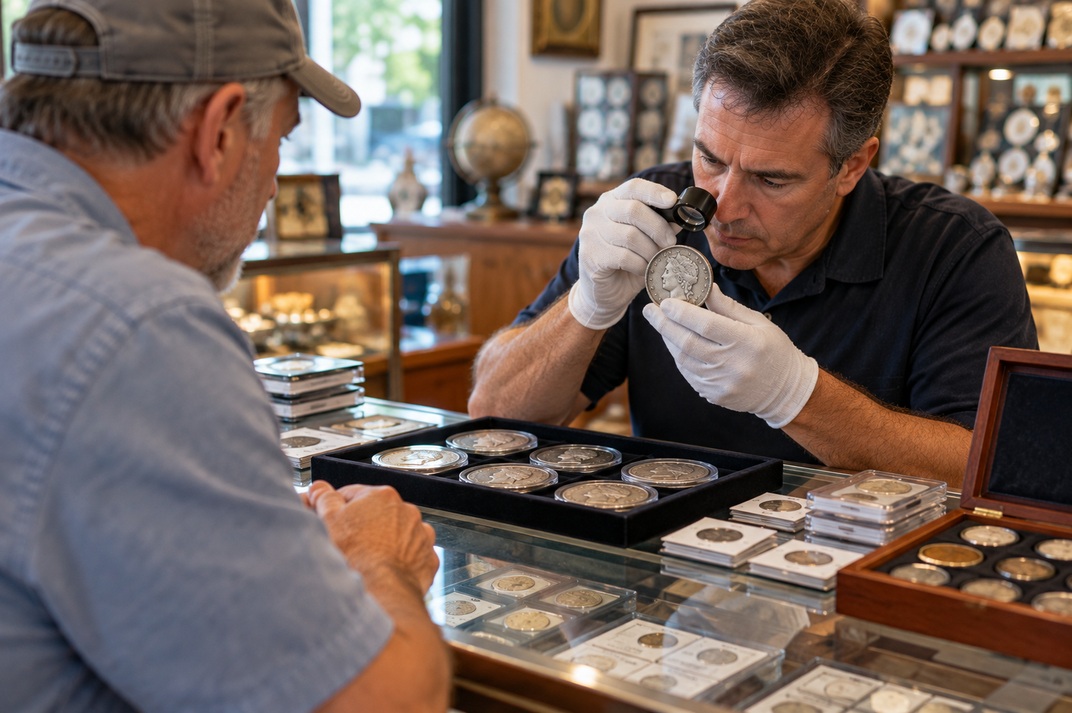
A coin shop worth trusting will look at each silver dollar individually, tell you its date, mint mark, and condition, explain whether it's worth melt value or a collector premium, and write the offer down coin by coin. If a shop weighs the whole roll, names one number, and pushes you to decide on the spot, that's your signal to leave.
Silver dollars are one of the most common things people inherit, and one of the easiest to undersell. At HJ Coins & Jewelry, we look at every coin and explain what we see. If you're in Lakeland with a roll or a box of dollars, give us a call before you sell anywhere at (863) 446-0713. The drive down US 27 is worth it for a straight answer.
What is the difference between melt value and collector premium on silver dollars?
Melt value is what the silver inside the coin is worth. Collector premium is what a coin is worth above that because of its date, mint mark, rarity, or condition. Some dollars are worth melt. Others are worth many times more.
Morgan dollars, minted from 1878 to 1904 and again in 1921, and Peace dollars, minted from 1921 to 1935, are 90 percent silver and hold about three quarters of a troy ounce each. Their melt value moves with the silver price every day. Common dates in circulated condition usually trade close to melt. But a Carson City "CC" mint mark, a scarce date, or a coin in high uncirculated condition can carry a premium well beyond the metal.
Watch for coins that look like silver dollars but aren't. Most Eisenhower dollars from the 1970s are copper nickel, except for special 40 percent silver collector versions. Susan B. Anthony and Sacagawea dollars have no silver at all. Estate collections from the historic homes near Lake Morton to newer neighborhoods off the Polk Parkway often mix all of these together in one coffee can, and sorting them correctly is the first step to a fair price.
Why should a coin shop grade and price each coin openly?
Because the grade and the date decide the price, and you deserve to see both. An open process lets you follow the reasoning and compare offers fairly.
Coin grading runs on a 70 point scale, from barely identifiable to flawless. A difference of a few points on a key date can change the value a lot. A good dealer will set each coin on the counter, look at it under magnification, tell you the grade they see, and explain why. For valuable coins, they may recommend professional grading by a service like PCGS or NGC before selling, because a certified grade often brings a better price.
Ask for the offer in writing, broken out by coin or by group: these twenty common Morgans at a price tied to melt, these two better dates at a premium, and so on. Our buying and selling coins service works that way, so you can see exactly where every dollar in the offer comes from.
What are the red flags of a rushed or vague offer?
A single lump sum, no explanation of the grade, pressure to decide right now, and a buyer who won't mention the current silver price. Any one of those is a reason to slow down.
Other warning signs include a buyer who says all the coins are "just common" without looking at them one at a time, a buyer who picks out a few coins and offers to take the rest "as a favor," or one who reacts to your coins by criticizing them to lower your expectations. Also be wary of anyone who suggests cleaning the coins. Cleaning leaves tiny scratches that collectors can spot, and it can cut a coin's value sharply. Keep them as they are, ideally in the tubes, holders, or boxes they came in.
Be careful with traveling buyers, too. Pop up events in hotel meeting rooms around Polk County come and go in a few days, which leaves you nobody to call later. A credible coin shop will also tell you when a coin belongs somewhere else, like a specialized auction, even if that means they don't buy it.
Why does an unhurried, in person review matter?
Because it gives you time to ask questions, see each coin examined, and understand the offer before you agree to anything. Coins with family history deserve that.
A Lakeland customer inherited a set of silver dollars from his grandfather. He brought them to us before going to any coin shop so we could help him figure out which ones were rare. That way he could be confident about what they were worth before he made any decisions. That's exactly how it should work. Nobody should feel hurried at the counter with a grandparent's collection. You should be able to watch each coin get examined, hear the reasoning, and take the written offer home to think about.
Our shop is open Monday through Friday from 10 to 6 and Saturday mornings, and we're happy to set aside time for a larger collection. If you're holding silver dollars in Lakeland, call (863) 446-0713 or schedule your coin review with us. Bring the whole box, and we'll go through it together.