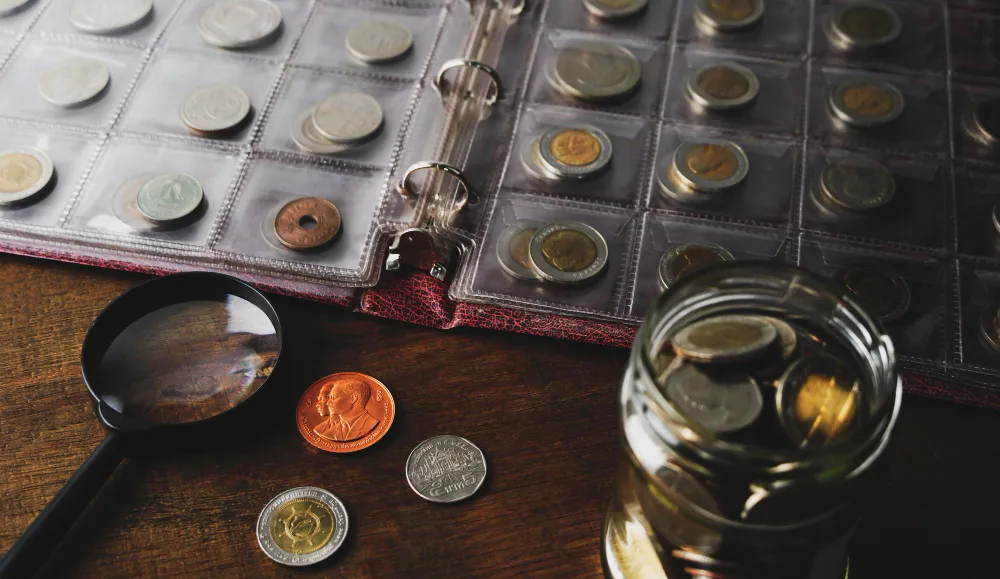
You’ve just cleaned out the attic in your Lakeland home and found a heavy jar of old pennies, or maybe you inherited a small box of silver dollars from a grandparent. Are they worth a fortune, or just face value? In Central Florida, we see this scenario almost every day. Determining the true value of a coin collection isn't a guessing game; it requires knowing exactly what to look for and who to trust.
What Determines the Grade of a Rare Coin?
Coin grading relies on the Sheldon Scale, which ranks coins from 1 to 70 based on their physical condition. A grade of "1" is barely identifiable, while a "70" represents a flawless coin with no scratches or wear. Getting a coin professionally certified by services like PCGS or NGC typically costs between $30 and $65 per coin, but this certification guarantees the grade and protects the buyer and seller.
In our experience, condition is the single biggest factor in value. A coin that looks shiny isn't necessarily "mint state"—it might have been cleaned, which actually destroys the value. In humid areas like Winter Haven or Bartow, we often see copper coins that have turned green or brown due to improper storage. This environmental damage significantly lowers the grade. When you visit a reputable coin shop Polk County residents trust, the dealer will examine the high points of the design (like the hair or cheek on a portrait) to see if there is any wear.
How Do I Know if My Coins Are Valuable?
Value usually comes down to three specific factors: scarcity, demand, and historical significance. Just because a coin is old doesn't mean it's valuable; a coin from the 1800s might only be worth a few dollars if millions were minted. Conversely, a 1909-S VDB Lincoln penny is highly valuable because minting was stopped abruptly, making them scarce. You always need to check the date and the mint mark—the tiny letter often found on the back or under the date, indicating where it was made.
While we specialize in numismatics, many estate collections also include other precious items. We often assist clients who are also interested in purchasing jewelry or assessing the value of family heirlooms found alongside coin collections. Spotting a key date or a rare variety requires a keen eye. For example, the 1916-D Mercury Dime is a key date to watch for. Even in low grades, this dime can fetch hundreds of dollars. If you aren't sure what you have, don't clean it. Bring it to a professional for an honest assessment.
Where Is the Best Place to Trade Coins in Central Florida?
You generally have two main options for trading: traveling to coin shows or a local brick-and-mortar shop. Shows happen periodically in places like Orlando or Tampa, but a local shop offers consistency and accountability. When you visit a coin shop Polk County locals recommend, you get face-to-face service and a relationship with a dealer who is there year-round, not just for a weekend.
We've learned that building a relationship with a local dealer pays off eventually. A local expert knows the market trends specific to our area and can often offer better prices because they don't have the high travel overhead of show circuit dealers. Plus, if you're looking for a specific piece to complete a set, a local dealer can keep an eye out for you. Whether you're in Lake Wales or Mulberry, having a trusted expert nearby makes the process of building a collection much safer and more enjoyable.
How Can Beginners Spot Counterfeit Coins?
Weighing the coin is the fastest way to spot a fake; a real Morgan Silver Dollar should weigh exactly 26.73 grams. If the weight is off by more than a fraction of a gram, it’s likely counterfeit. You should also use a strong magnet. Silver and gold are non-magnetic. If your "silver" coin sticks to a magnet, it's likely a steel or iron slug coated in a shiny finish.
Counterfeits are becoming increasingly sophisticated, with some fakes even coming in counterfeit plastic grading slabs. Essential tools for any collector include a digital scale that measures to 0.01 grams and a jeweler's loupe with at least 10x magnification. These tools help you see details that the naked eye misses, such as casting bubbles or incorrect font styles on the date. If you're nervous about authenticity, stick to buying and selling coins that have already been certified by a top-tier grading service.
Do You Pay Sales Tax on Gold and Silver in Florida?
In Florida, U.S. coins and currency are generally exempt from sales tax, regardless of the purchase amount. However, for gold and silver bullion (like bars or non-US coins), the transaction must exceed $500 to be tax-exempt. If you buy less than $500 worth of bullion, you're required to pay the standard 6% sales tax plus any local county surcharges.
This tax structure makes Florida one of the best states in the country for precious metals investors. Most states do not offer such favorable terms. For investors in Polk County, this means you can put more of your money into the metal itself rather than handing it over in taxes. When planning a purchase, it makes financial sense to save up and buy in bulk to cross that $500 threshold if you're buying bullion.
Is Investing in Rare Coins a Good Long-Term Strategy?
Rare coins often act as a hedge against inflation and hold their value when the stock market dips. Over the last 20 years, high-quality rare coins have seen steady appreciation, although the market does fluctuate based on economic conditions. Unlike stocks or crypto, a rare coin is a tangible asset—something you can physically hold and enjoy while it potentially grows in value.
However, diversification is key. We typically suggest that collectors view numismatics as a fun hobby that can also serve as a store of value, rather than a "get-rich-quick" scheme. Most financial advisors recommend limiting alternative investments (like gold, art, or coins) to about 5% to 10% of your total portfolio. If you're looking for a coin shop Polk County investors use to diversify their holdings, look for one that offers transparent pricing and educational resources.
Ready to Evaluate Your Collection?
Whether you're looking to sell a single gold coin or appraise an entire estate collection, we’re here to help you navigate the process with honesty and transparency. Don't let valuable history sit in a drawer gathering dust.
Contact HJ Coins & Jewelry at (863) 446-0713 or visit us to find out what your collection is really worth.